
Around 90% of small businesses are worried their organic visibility will suffer as AI search continues to grow. While this has led many to invest in AI visibility, many companies neglect some of the more nuanced SEO concepts. In AI-driven search environments, those internal signals matter even more because systems rely on clear structure and strong relationships to assess authority and confidence. Pages that sit outside the internal linking framework are easier for AI models to ignore, which makes orphan pages a growing risk as search continues to evolve.
One of the most common issues gets overlooked because it rarely causes obvious errors or sudden drops. Orphan pages weaken site structure by cutting content off from internal links, authority flow, and clear crawl paths. As search engines rely more on strong internal signals to evaluate trust and relevance, these disconnected pages can hold back performance even when the rest of the site appears well-optimized.
The sections below break down how orphan pages form, why they cause structural problems, and what you can do to reconnect them before performance declines.
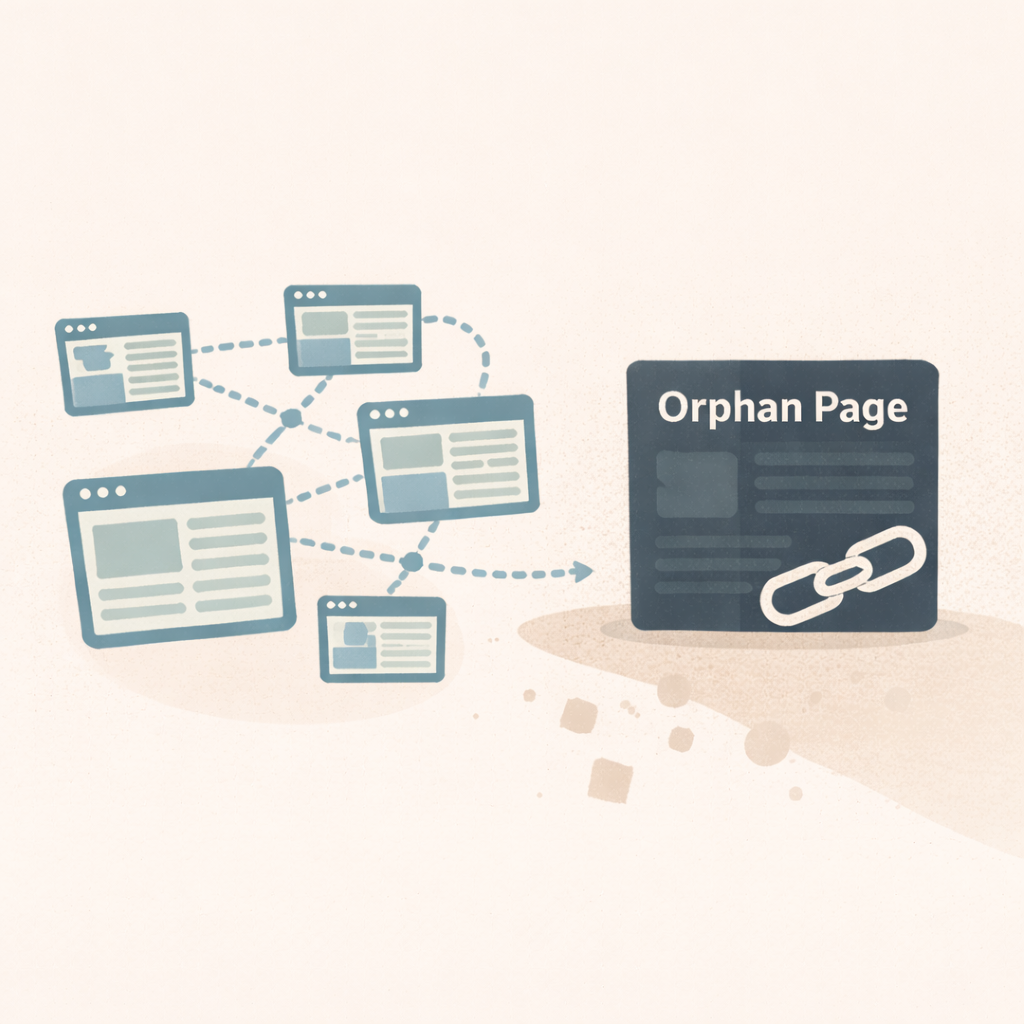
Orphan pages are pages on a website that have no internal links pointing to them from other pages. Search engines can still find these pages through sitemaps or external links, but without internal links, they lack clear context and importance within the site. This disconnect makes it harder for search engines to understand how the page fits into the overall structure of the site.
Because orphan pages sit outside the internal linking system, they often fail to benefit from authority passed through other pages. Even strong content can struggle to perform when nothing on the site references it. Over time, these pages tend to receive less crawling attention and weaker ranking signals compared to pages that are properly connected.
Internal links help search engines understand which pages matter, how topics relate, and where authority should flow. When a page has no internal links pointing to it, those signals stop entirely, leaving the page disconnected from the rest of the site.
Search engines cannot place the page within a topic cluster or determine its relative importance. Orphan pages break internal link signals in several key ways:
Without these signals, ranking strength stays concentrated elsewhere on the site instead of reaching the orphaned page. Even pages targeting valuable keywords can stall because search engines lack reinforcement from internal references.
These pages mititgate overall SEO performance over time because they sit outside the system that helps strong pages grow stronger. Search engines rely on internal links to understand which pages deserve attention and how authority should move through a site. When a page has no internal links, it receives little reinforcement, even if the content itself has value.
As more orphan pages exist, overall site clarity declines. Authority spreads unevenly, crawl focus becomes less predictable, and important pages lose the benefit of a tightly connected structure. Over time, this leads to slower growth, weaker rankings, and missed opportunities to strengthen priority content.
A common example appears after a site redesign, where older blog posts remain live but lose all internal links when categories change. Even though the content stays accurate, traffic slowly declines because search engines stop revisiting the pages. Authority concentrates only on newer, better-linked content.
When a page has no internal links, crawlers have fewer natural paths to reach it, which can reduce how often the page gets revisited or reevaluated. Even when a sitemap includes the page, search engines may treat it as lower priority compared to pages that appear frequently within the internal structure.
Indexation also becomes less stable for orphan pages. Search engines may index them inconsistently, delay updates, or drop them entirely when signals conflict or confidence remains low.
Without internal links providing context, the page exists in isolation, making it harder for search engines to assess relevance, freshness, and importance. Over time, this can lead to uneven coverage across the site, where well-linked pages receive regular attention while orphan pages quietly fall behind or disappear from search results altogether.
Pages become orphaned most often during routine site changes rather than deliberate decisions. Content updates, redesigns, and navigation adjustments can quietly remove internal links while leaving the underlying URLs live. These pages still load normally, which makes the issue easy to miss during reviews.
Moving from date-based URLs (example.com/2023/01/post) to category-based URLs (example.com/resources/topic/post) without rebuilding internal links is a common way orphan pages get created. The URLs remain live, but no pages reference them anymore.
Black Friday landing pages or webinar registration pages that lose navigation links after promotions or events end can become orphaned, remaining live but disconnected from the site’s structure. As these situations accumulate, site structure weakens, and disconnected pages continue to exist without a clear role or visibility within search.
Reconnecting orphan pages does not require rewriting content or changing page intent. Small structural adjustments can restore internal signals and bring these pages back into the site’s flow. The goal is to give search engines clear paths and context without disrupting existing content, and we’ll explore how to achieve this below.
Internal connections work best when they come from pages that already support the same topic or intent. Contextual links placed within relevant sections help search engines understand how the page fits into the broader site structure.
Authority can then flow naturally through those connections instead of stopping at stronger pages. Over time, this restores visibility without changing the content itself or its purpose.
Sitewide elements can help restore visibility when used with intent rather than as a catchall. Navigation and footer links work best for pages that support core sections or serve an ongoing purpose within the site.
These links signal consistent importance and give crawlers reliable access paths across every page load. When applied selectively, they reinforce structure without overwhelming the navigation or weakening focus on priority pages.
Topic clusters create natural pathways that help search engines understand how related pages support one another. Connecting pages through shared themes restores relevance without changing content or URLs.
This approach strengthens context while keeping the structure intentional. Key ways topic clusters help reconnect pages:
When pages sit within a clear cluster, search engines can interpret relevance more confidently. Visibility improves as authority flows across connected content instead of stopping at isolated pages.
Orphan pages usually appear after routine changes like site redesigns, content cleanups, or navigation updates. Pages remain live, but internal links pointing to them get removed or never added. Over time, these changes create gaps that leave pages disconnected from the rest of the site.
Orphan pages can rank, but performance is often unstable or limited. Without internal links, search engines lack signals that confirm importance or relevance. Rankings may fluctuate, stall, or disappear as confidence in the page remains low.
A small number of orphan pages may not cause immediate harm, especially on very small sites. As a site grows, these pages add structural noise and reduce clarity. Larger sites feel the impact more quickly because internal linking plays a bigger role in scaling visibility.
Low-performing pages still participate in the internal linking system, even if rankings remain weak. Orphan pages sit outside that system entirely, which limits their ability to improve regardless of content quality.
Regular audits work best, especially after content launches, migrations, or structural updates. Catching orphan pages early keeps internal linking clean and prevents long-term visibility issues from building up quietly.
Handling orphan pages early prevents small structural issues from becoming long-term performance problems. Reconnecting pages while a site is still manageable keeps authority focused, crawl paths clear, and content aligned with business priorities.
As sites grow, fixing these gaps becomes harder and more disruptive, which makes early action far more effective. Treating orphan pages as a routine maintenance issue helps protect visibility and keeps the site working as a cohesive system rather than a collection of disconnected pages.
If orphan pages are holding your site back, addressing them early keeps small structural gaps from turning into larger visibility issues. Segment helps teams identify orphaned pages, restore structure, and keep sites scalable as content continues to grow. Book a call with Segment to identify orphan pages across your site and uncover where stronger internal connections can restore structure, improve visibility, and establish sustained search growth.


