
A study by Ahrefs of over 300,000 keywords concluded that over 50% of sources mentioned in AI overviews rank in the top 10 results of the results page. With this information in mind, people are refining their keyword strategies to be more effective moving into 2026. However, it’s crucial to understand the answer to “what is keyword cannibalization” when deciding which ones to target.
AI overviews rely on strong consensus signals to decide which sources to surface. When a site sends mixed signals by spreading relevance across multiple pages targeting the same query, that clarity breaks down. Keyword cannibalization weakens a site’s ability to appear as a trusted source, not only in traditional rankings, but also in AI-driven search results that depend on clear topical authority.
You can publish more content, earn more links, and still struggle to move rankings if your own pages are competing against each other. However, keyword cannibalization quietly undermines performance by splitting authority and confusing search engines about which page should lead. Understanding how and why it happens is critical for turning existing content into a clear, high-performing search asset instead of a collection of pages fighting for the same ground.
Below, we’ll explore how keyword cannibalization develops, why it weakens rankings, how to spot it early, and what teams can do to restore search performance.
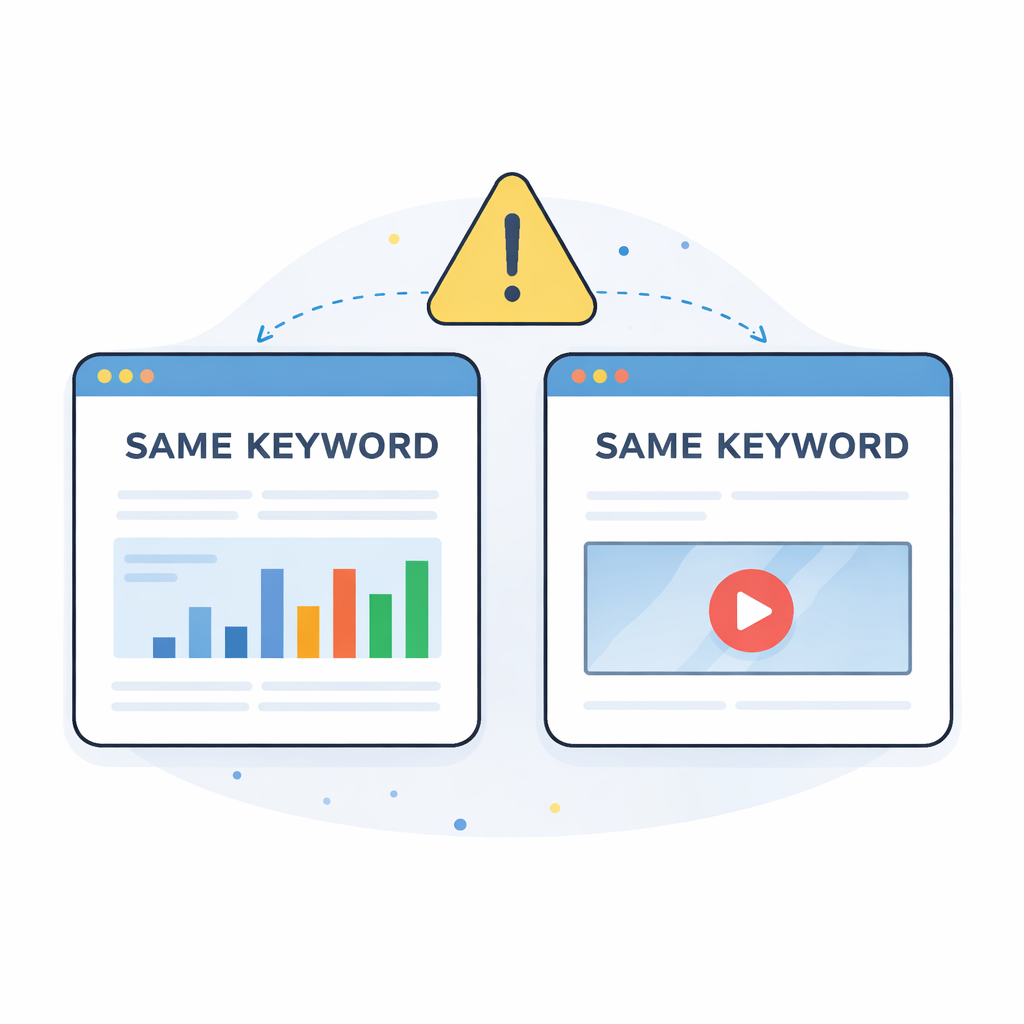
Keyword cannibalization refers to a situation where multiple pages on the same site target the same search term or very close variations of it. Instead of reinforcing relevance, those pages end up competing with each other for visibility.
Search engines receive mixed signals about which page should rank, so none of them perform as well as they could. Over time, rankings fluctuate, traffic spreads thin, and the page that should win never fully does. The problem often stays hidden because traffic still exists, even though performance remains below potential.
Early signals usually show up before rankings drop outright. The issue often stems from publishing decisions made over time. Multiple blog posts may target the same core keyword, product, and category pages can drift into overlapping intent, and older content often remains live after site updates without consolidation.
Location or service pages reused with minimal variation further compound the problem, creating internal competition that search engines struggle to resolve. Addressing these overlaps restores clarity and allows search engines to assign authority correctly.
As time passes, overlapping pages emerge as sites publish more content without a clear topic map. New articles chase similar variations, while older URLs remain active and relevant. Blog posts often drift into areas intended for core pages, which blurs intent and authority.
Search engines then receive competing signals with no obvious priority. Overlap typically forms through a mix of publishing habits and site maintenance gaps. Teams publish multiple articles around the same primary keyword, expand blog topics into service page territory, and create near-duplicate landing pages for minor variations.
At the same time, outdated URLs remain indexed after site changes, templates get reused with little differentiation, and consolidation is skipped during major updates, allowing internal competition to grow unnoticed. Addressing publishing habits and site structure together reduces overlap before it compounds.
When multiple pages target the same query, authority gets split instead of concentrated. Internal links, external signals, and engagement metrics spread across several URLs rather than reinforcing a single result. Search engines struggle to identify a clear winner, resulting in volatility and suppressed performance.
Even strong pages fail to reach full potential when relevance stays divided. Key ranking issues caused by competition include:
Consolidating signals around a single page restores clarity and allows rankings to stabilize.
Internal keyword conflict often surfaces through performance inconsistencies rather than sudden drops. Pages trade positions for the same query, traffic spreads across multiple URLs, and expected gains never materialize.
These signals usually appear in analytics and search data before the issue becomes obvious. Warning signs often appear as instability rather than sharp declines. Multiple pages rotate positions for the same query, impressions spread across several URLs, and traffic lands on secondary pages instead of the intended primary target.
Core pages may underperform despite solid content and links, signaling that authority is being diluted internally. Spotting these patterns early makes resolution easier and prevents deeper ranking erosion.
HubSpot ran into keyword cannibalization as its blog and resource library expanded. Multiple articles targeted the same SEO and marketing terms from slightly different angles, which caused rankings to rotate between URLs.
The team audited overlapping content, merged similar posts, and redirected weaker pages into stronger pillar pages. Rankings stabilized once authority consolidated around fewer, clearer URLs.
Shopify faced a similar issue across its help docs, blog posts, and landing pages. Several pages competed for identical eCommerce and setup queries, which diluted performance despite strong backlinks.
The company resolved this problem by redefining search intent for each page type and pruning or redirecting content that no longer served a distinct purpose. Afterward, search visibility improved after search engines received clearer signals about which pages deserved priority.
When multiple pages target the same query, search engines evaluate subtle differences to decide which URL should surface. The process weighs relevance, authority, and user behavior rather than relying on a single ranking factor.
Even minor signal advantages can put one page ahead of others. Several factors influence this decision:
When these signals remain evenly distributed, rankings often rotate instead of settling.
Consolidation works when one page becomes the clear destination for a topic, and every signal supports that decision. The process focuses on removing internal competition and strengthening relevance around a single URL. Practical steps to take:
Once signals point to one page, search engines gain the necessary insight, and rankings become more stable.
Preventing keyword cannibalization requires intention before content goes live rather than fixes after performance drops. A clear topic map defines which pages own specific themes and prevents overlap as a site expands.
Content decisions should account for search intent, page purpose, and future growth instead of short-term keyword coverage. Regular audits help identify early signs of duplication before they affect rankings. Planning your SEO strategy with structure and restraint keeps authority concentrated and avoids internal competition over time.
Keyword cannibalization usually stems from content expansion without a clear topic map. Blogs, landing pages, and legacy content begin targeting similar terms over time, especially when pages stay live after site updates.
Keyword cannibalization is not inherently harmful, but it becomes a problem when pages compete for the same intent. When overlap exists without a clear hierarchy, search engines struggle to assign authority.
The strongest page aligns most closely with search intent, has the clearest internal support, and plays a defined role in the site structure. Performance data and intent matching typically reveal the best candidate.
Yes. When signals remain split across multiple URLs, AI-driven results receive less clarity about which page represents the authoritative answer. Clear consolidation improves visibility in both traditional and AI-based search experiences.
Regular audits help catch overlap early. Reviewing rankings, landing pages, and internal links on a recurring basis prevents small conflicts from becoming larger performance issues.
Understanding the answer to “what is keyword cannibalization” is essential for maintaining clear search signals and protecting long-term visibility, since unresolved overlap quietly limits rankings and prevents the strongest pages from performing. Addressing it brings structure back to your content strategy and allows search engines to evaluate each page with confidence.
Resolving keyword cannibalization rarely happens by accident. It requires a clear view of how pages compete, where authority is splitting, and which URLs should lead for each topic. Without that clarity, even well-performing sites can plateau despite continued content investment.
If keyword overlap is holding your site back, fixing it requires more than surface-level tweaks. Segment works with software teams to map intent correctly, consolidate authority where it belongs, and turn scattered content into a focused search asset that performs.
Book a call with Segment to audit your site for keyword cannibalization and uncover where a clearer content structure can unlock measurable growth.


